

The last week of December is the quietest stretch of the training year. Races are done, sessions are lighter, and there is finally room to think. That makes it the perfect time for a year-end review for athletes: a structured look back at what worked, what didn’t, and what you want to carry forward.
Most athletes skip this step. They jump straight to January goals without understanding the year that just happened. The result is the same mistakes, repeated with fresh enthusiasm.
This guide walks you through a simple five-step reflection exercise. It takes about 60 to 90 minutes, a notebook, and some honesty. By the end, you’ll have a clear picture of your year and a short list of decisions for the next one.
Why a Year-End Review Matters for Athletes
Your training log holds a year of data, but data only helps when you read it. A year-end review turns scattered sessions, results and feelings into lessons you can act on.
There are three good reasons to make it a habit:
- You see patterns you miss day to day. One bad week feels random. Three bad weeks every March is a pattern worth fixing.
- You give your wins proper credit. Athletes are quick to dwell on setbacks and slow to notice progress. Writing wins down builds real, evidence-based confidence.
- Your next goals get smarter. Goals built on an honest review are more realistic and far more likely to stick than goals built on a New Year’s mood.
If you already did a post-season review in the autumn (internal link: post 5, The Post-Season Review), this exercise is different. That review looked at competition. This one looks at the whole year, including training, health, life balance and how you felt as an athlete.
The 5-Step Year-End Reflection Exercise
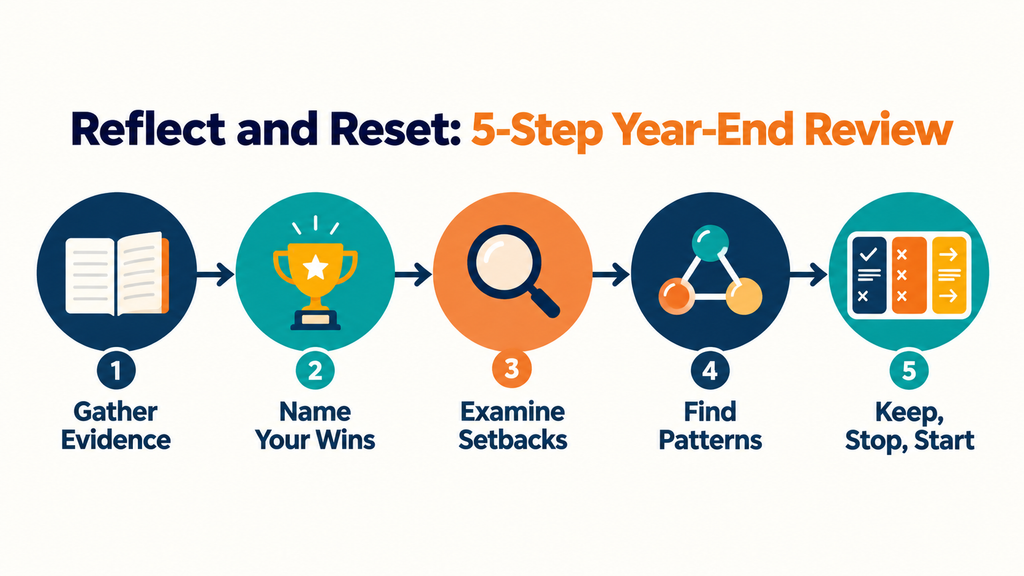
Find a quiet hour, put your phone on do-not-disturb, and work through these steps in order. Write your answers by hand or in a single document so you can revisit them next December.
Step 1: Gather Your Evidence
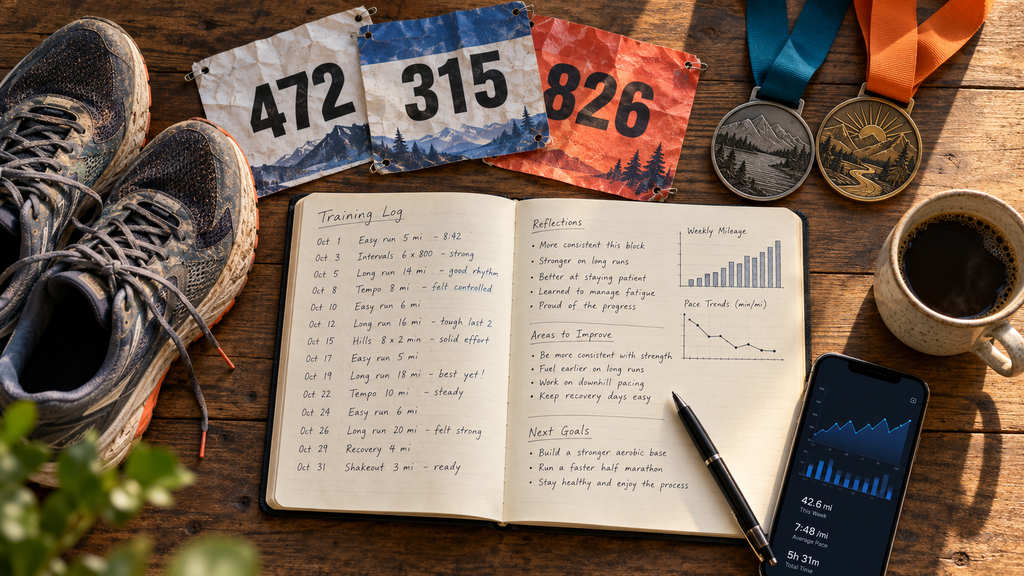
Before you reflect, collect the facts. Memory is unreliable and tends to exaggerate the highs and lows.
Pull together your training log or app history, race results, any coach notes, and photos from the year. Note a few headline numbers: total training hours, number of competitions, personal bests, and days lost to illness or injury. You’re not judging anything yet. You’re just building an accurate picture.
Step 2: Name Your Wins
Write down at least ten things that went well this year. Include results, but don’t stop there. Count the early mornings you showed up, the injury you managed sensibly, the race where you stayed calm under pressure.
For each win, add one line on why it happened. “I hit a 5K personal best” becomes “I hit a 5K personal best because I was consistent with intervals from March to May.” That second sentence is the part you can repeat.
Step 3: Examine Your Setbacks Honestly
Now list the disappointments: missed goals, poor races, injuries, lost motivation. Keep the tone curious, not critical. You’re a coach reviewing an athlete’s file, not a judge handing down a verdict.
For each setback, answer three questions:
- What actually happened?
- What contributed to it?
- Which parts were within my control?
That last question matters most. Weather and illness happen. Skipping your warm-up or ignoring early pain signals are things you can change.
Step 4: Look for Patterns
Read back through your wins and setbacks side by side. Patterns usually jump out quickly. Look across four areas:
- Training: Did you improve most during consistent blocks? Did intensity jumps lead to niggles?
- Recovery: How did sleep, rest days and stress affect your best and worst weeks? (internal link: post 23, Sleep)
- Mental: When did you feel most confident? When did doubt or comparison creep in?
- Life: How did work, school, travel or family commitments shape your training?
Aim for three to five clear observations, such as “I got sick every time I stacked two hard weeks during busy periods at work.”

Step 5: Decide What to Keep, Stop and Start
Turn your patterns into decisions with a simple three-column list:
- Keep: Habits and approaches that clearly worked. Protect these.
- Stop: Behaviours that cost you performance, health or enjoyment.
- Start: One to three new things worth trying, based on gaps you found.
Limit yourself to three items per column. A short list you actually follow beats a long list you forget by February.
From Reflection to Reset: Planning Your New Season

Reflection is only useful if it changes what you do next. Use your keep, stop and start list to shape the year ahead.
Set process goals, not just outcome goals. An outcome goal like “qualify for nationals” gives direction. Process goals like “complete two strength sessions every week” give you something to do on a Tuesday. Pair each outcome goal with two or three process goals drawn from your review. (internal link: post 9, Goal Setting That Works)
Choose a theme word for the year. One word such as “consistent,” “patient” or “brave” is easy to remember on hard days. It acts as a filter for decisions when your plan meets real life.
Write a short letter to your future self. Describe how you want to feel next December and what you hope you’ll have done. Seal it or save it, then read it during next year’s review.
Book your check-ins now. Put a 20-minute mini-review in your calendar at the end of March, June and September. Quarterly check-ins keep your reflection alive long after the new-year energy fades. (internal link: post 21, Why Resolutions Fail Athletes)
Common Year-End Review Mistakes to Avoid
- Only reviewing results. Your race times are the end product. The real lessons are in your training, recovery and mindset.
- Being too harsh. Self-criticism feels productive but rarely is. Talk to yourself the way a good coach would talk to you.
- Setting too many goals. Ten new priorities means no priorities. Three clear decisions will take you further.
- Doing it alone when you don’t have to. Share your review with a coach, training partner or teammate. Someone who watched your year may spot what you can’t.
- Never looking at it again. A review filed away and forgotten is just a diary entry. Keep it somewhere you’ll see it.
Close the Year Well, Start the Next One Stronger
A year-end review for athletes doesn’t need to be complicated. Gather your evidence, name your wins, examine your setbacks, spot the patterns, and decide what to keep, stop and start. Then turn those decisions into a handful of goals and check in on them every quarter.
The athletes who improve year after year aren’t always the most talented. They’re the ones who learn from every season. Give yourself an hour this week, and start the new year with a plan built on what you actually know.
Your turn: Block out 60 minutes before January 1 and work through the five steps. Then share your theme word for the new season in the comments, or tag us on social media so we can cheer you on.