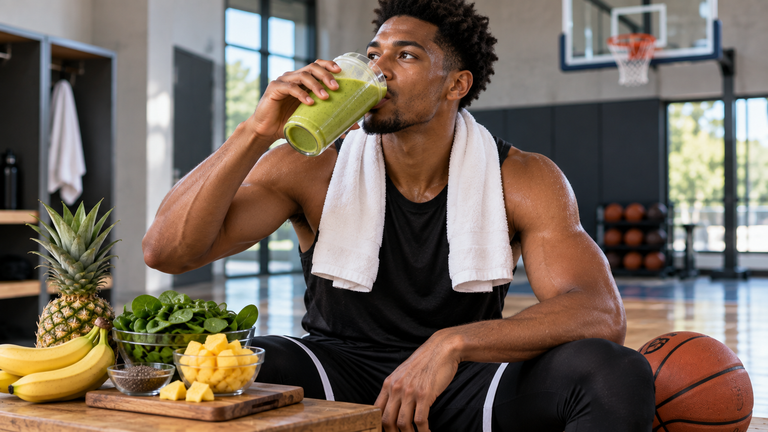

Walk into any sports nutrition shop and you will find shelves promising more power, faster recovery, and leaner muscle. Most of it will lighten your wallet more than it improves your performance. Finding the best supplements for athletes is less about what’s new and more about what the research has backed for years.
The good news: a small handful of supplements have strong, repeatable evidence behind them. A few more are worth it only if you have a specific deficiency. The rest range from harmless waste to genuine risk.
This guide sorts them into three groups: spend, check first, and skip. It also shows you how to buy safely so a contaminated tub never costs you your season.
Food First: Why Supplements Sit at the Top of the Pyramid
No supplement can fix an underfuelled athlete. If you are short on total energy, carbohydrate, or protein, that gap will cost you far more than any powder can give back.
Think of performance nutrition as a pyramid. The wide base is eating enough. Above that comes the right balance of carbs, protein, and fat. Then timing around training. Supplements are the narrow tip: they add a small extra edge, but only once everything underneath is in place.
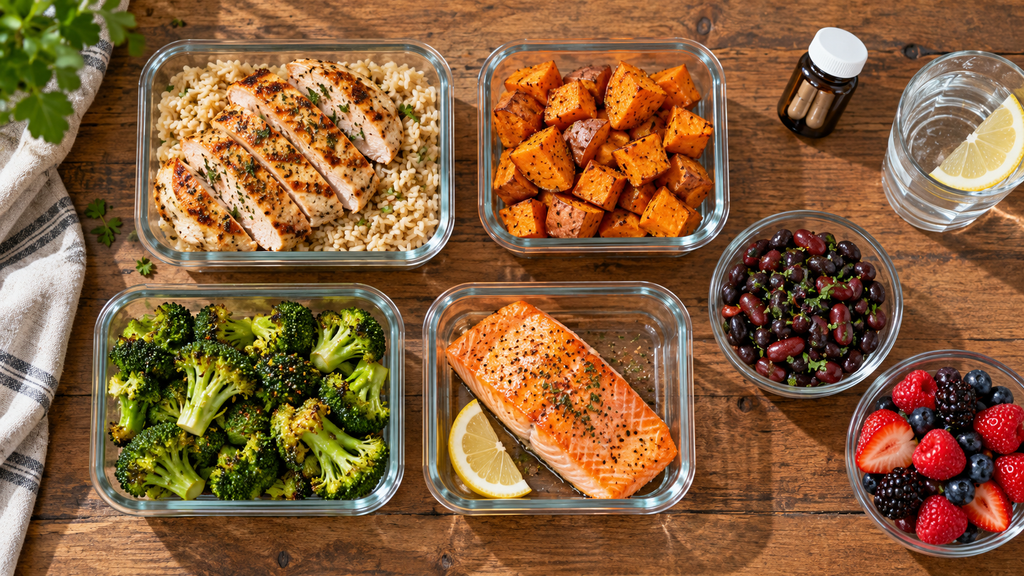
If you haven’t nailed the basics yet, start with Athlete Nutrition 101 and Fueling Before, During, and After Training before spending a penny on supplements.
The Best Supplements for Athletes: Worth Your Money
These have the strongest research support for performance. Each still needs to fit your sport, your body, and your training.
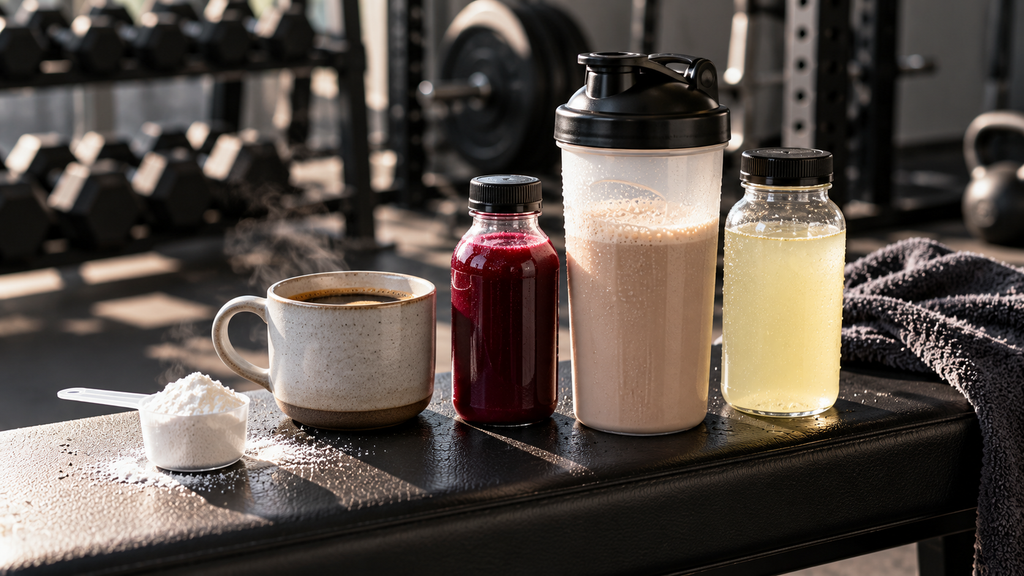
Creatine monohydrate
Creatine is the most researched sports supplement there is. It helps you repeat short, high-intensity efforts and supports strength gains in the gym. A typical daily dose is 3–5 g, taken any time of day. Plain monohydrate works as well as pricier forms. Expect 1–2 kg of water weight, which matters if you compete in weight classes or climb hills.
Caffeine
Caffeine reduces perceived effort and improves endurance and power output. Research supports 3–6 mg per kg of body weight, taken about 60 minutes before exercise. More is not better: high doses bring jitters, gut upset, and poor sleep. Practise in training first, and keep it away from evening sessions.
Dietary nitrate (beetroot juice)
Nitrate helps your muscles use oxygen more efficiently. The benefit is clearest in efforts of 10–40 minutes and is often smaller in highly trained athletes. Concentrated beetroot shots are the simplest way to get an effective dose, taken 2–3 hours before exercise.
Beta-alanine
Beta-alanine raises muscle carnosine, which buffers acid during hard efforts lasting roughly 30 seconds to 10 minutes. The evidence is weaker than for the supplements above, with small gains that are harder to see in well-trained athletes. It needs several weeks of daily loading to work. Harmless skin tingling is common; splitting the dose helps.
Sodium bicarbonate
Bicarbonate also buffers acid in short, all-out efforts. It works, but gut distress is a real risk. Trial it carefully in training, never for the first time on race day.
Protein powder and electrolytes (convenience, not magic)
Protein powder doesn’t outperform food. It’s worth buying when it makes hitting your daily protein easier, especially after training or on the move. Likewise, electrolyte drinks earn their place in long or hot sessions and when you lose a lot of salt in sweat, not as an all-day habit.
Check First: Worth It in the Right Situation
These help in specific situations. Vitamin D suits most athletes through winter, while iron and omega-3 depend on your blood test or your diet.
Vitamin D
Athletes who train indoors, live at northern latitudes, or have darker skin are often low through autumn and winter. Low vitamin D is linked to more illness, stress fractures, and weaker muscle function. In the UK, the NHS advises adults to consider 10 micrograms a day through autumn and winter, and never to exceed 100 micrograms a day. Higher doses are for diagnosed deficiency, so get tested before going above the standard dose.
Iron
Iron deficiency is common in endurance athletes, female athletes, and plant-based eaters, and it quietly drains performance. But too much iron is toxic. Never self-prescribe: get ferritin and haemoglobin checked, and supplement under medical guidance.
Omega-3s
If you rarely eat oily fish, an omega-3 supplement may support general health. Performance claims are still mixed, so treat it as a health choice rather than a performance one.
Supplements to Skip: Save Your Money
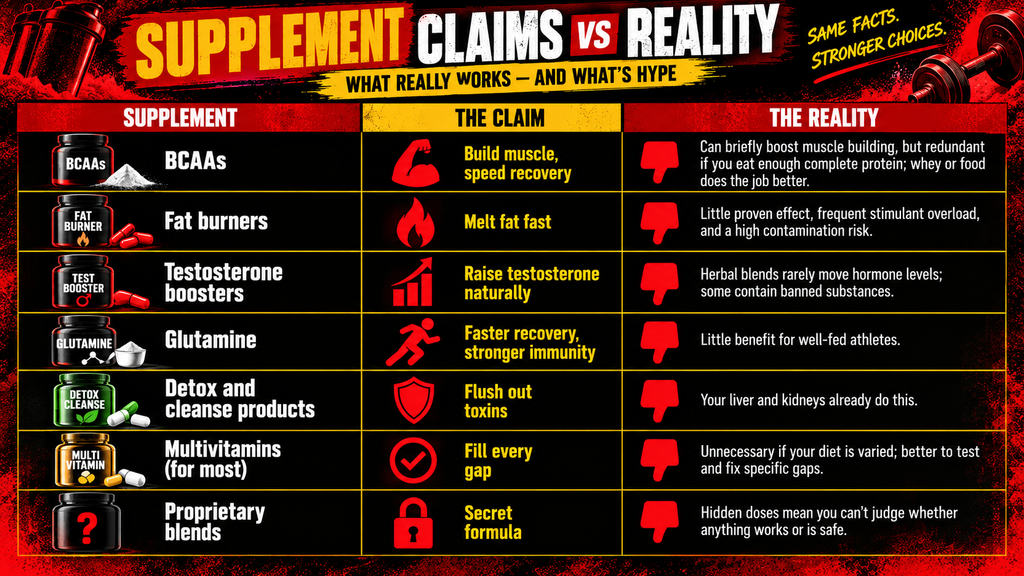
These are heavily marketed but poorly supported, or simply unnecessary if you eat well.
A simple rule: the bigger the promise on the label, the smaller the evidence behind it.
How to Buy Safely: Third-Party Tested Supplements
Supplements are not regulated like medicines. Studies have repeatedly found products contaminated with stimulants, steroids, or ingredients not on the label. If you’re a tested athlete, “I didn’t know it was in there” won’t protect you from a ban.

Before you buy anything, run through this checklist:
- Look for a third-party certification such as Informed Sport or NSF Certified for Sport. These test batches for banned substances.
- Check the batch number on the certifier’s website, not just the logo on the tub.
- Avoid proprietary blends that hide individual doses.
- Be wary of bold claims like “anabolic,” “hormone-boosting,” or “rapid fat loss.”
- Trial everything in training, never for the first time before a competition.
- Talk to a sports dietitian or doctor, especially if you’re young, have a medical condition, or take medication.
The Bottom Line
The best supplements for athletes are boring, cheap, and well studied: creatine, caffeine, nitrate, beta-alanine, and bicarbonate, plus protein powder and electrolytes for convenience. Vitamin D is worth taking through winter, and iron can be a game-changer when a test shows you’re low. Almost everything else is marketing.
Nail your daily fuelling first. Then add one proven supplement at a time, test it in training, and buy only third-party certified products. Your wallet and your performance will both thank you.
Frequently Asked Questions
What is the most effective supplement for athletes? Creatine monohydrate has the largest body of evidence, especially for strength, power, and repeated sprint efforts.
Do I need supplements if I eat a healthy diet? Most athletes don’t. A varied diet that meets your energy needs covers almost everything; supplements fine-tune the last few percent.
Are supplements safe for drug-tested athletes? Only if they’re third-party certified, and even then the responsibility is yours. Always check the batch on the certifier’s website.
Should teenage athletes take supplements? Generally, young athletes should focus on food. Talk to a doctor or sports dietitian before using any supplement.
| Claim in the post | Source |
|---|---|
| Only a few supplements (caffeine, creatine, nitrate, bicarbonate, possibly beta-alanine) have good evidence; trial everything in training; get professional advice | IOC consensus statement, Maughan et al. 2018 (BJSM DOI) |
| Creatine: 3–5 g/day maintenance, repeated high-intensity efforts, 1–2 kg water weight, relevance to weight classes and moving body mass uphill | IOC 2018, Table 3 |
| Caffeine: reduces perceived effort; side effects at high doses (nausea, anxiety, insomnia); higher doses add no benefit | IOC 2018, Table 3 and Adverse Effects |
| Nitrate: 2–3 hours before; benefits mainly in efforts under 40 min; smaller gains in highly trained athletes | IOC 2018, Table 3 |
| Beta-alanine: buffers acid via muscle carnosine; needs weeks of loading; tingling (paraesthesia) eased by split doses | IOC 2018, Table 3; ISSN position stand on beta-alanine |
| Sodium bicarbonate: works for short all-out efforts; well-established gut distress; test before competition | IOC 2018, Table 3 and Adverse Effects |
| Protein powder and electrolytes as convenience sports foods | IOC 2018, Table 2 |
| Vitamin D: athletes often low in winter; linked to illness and stress fractures; correct deficiency | IOC 2018, Tables 1, 4 and 5 |
| UK advice: adults should consider 10 micrograms vitamin D daily in autumn and winter | NHS: Vitamin D |
| Iron: common deficiency in athletes; too much iron is harmful; test before supplementing | IOC 2018, Table 1 and Adverse Effects |
| Omega-3: limited performance evidence; oily fish preferred | IOC 2018, Tables 4 and 5 |
| Glutamine: limited support | IOC 2018, Table 4 |
| Fat burners: evidence far from conclusive | IOC 2018, Table 6 |
| BCAAs: alone, insufficient to drive muscle building | Wolfe 2017, JISSN; Tipton, GSSI |
| Testosterone boosters: most ingredients lack evidence | Clemesha et al. 2019, via ScienceDaily |
| Contamination with banned substances; strict liability for tested athletes | IOC 2018, Adverse Effects (Geyer et al. 2004: about 15% of 600+ products) |
| Informed Sport tests every batch; check the batch number on its website | Informed Sport: About; Informed Sport: Athletes |