Most athletes get one part of their nutrition right — usually the post-workout protein shake — and leave the other two-thirds of the fueling window on the table. But performance and recovery aren’t decided by a single meal. They’re decided by what you do before, during, and after every session, consistently, week after week.

This guide breaks fueling before during and after training into three practical windows, with real food examples you can use whether you’re heading into an easy aerobic session or a race-intensity workout.
Why Fueling Timing Matters
Your body runs on a mix of stored carbohydrate (glycogen), fat, and, in a pinch, protein. Training depletes glycogen and breaks down muscle tissue. What and when you eat around a session determines how much energy you have to execute it, and how quickly you bounce back afterward. Athletes who consistently under-fuel around training tend to see it show up as fatigue, poor session quality, slower recovery, and a higher injury and illness risk over time.
Before Training: Building the Tank
The goal of pre-training nutrition is simple: arrive with enough available glycogen and fluid that your body isn’t playing catch-up from minute one.
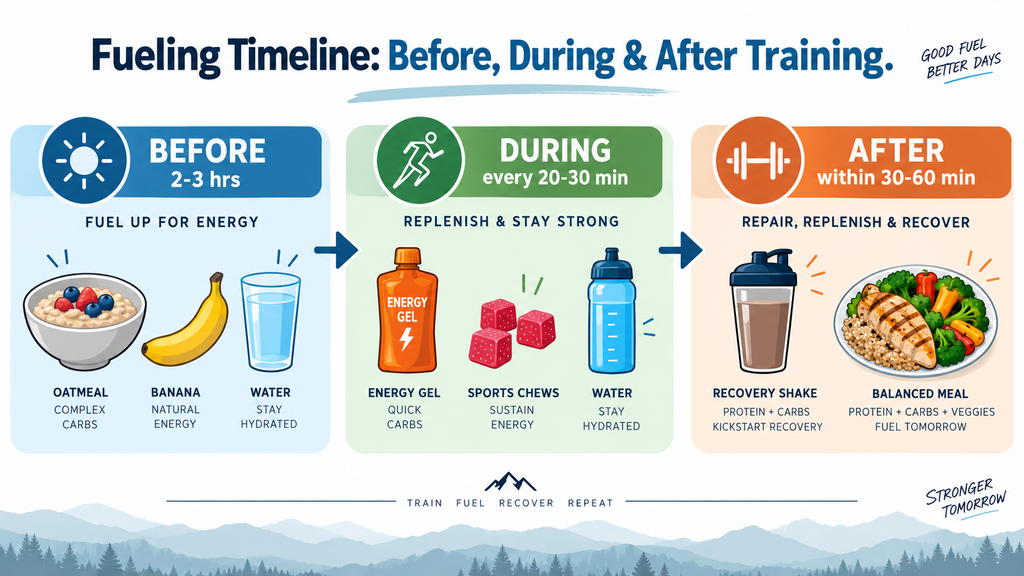
2–3 hours before training: A full meal with carbohydrate, moderate protein, and low fat and fiber (both slow digestion). Think oatmeal with banana and a scoop of protein, or rice with grilled chicken and steamed vegetables.
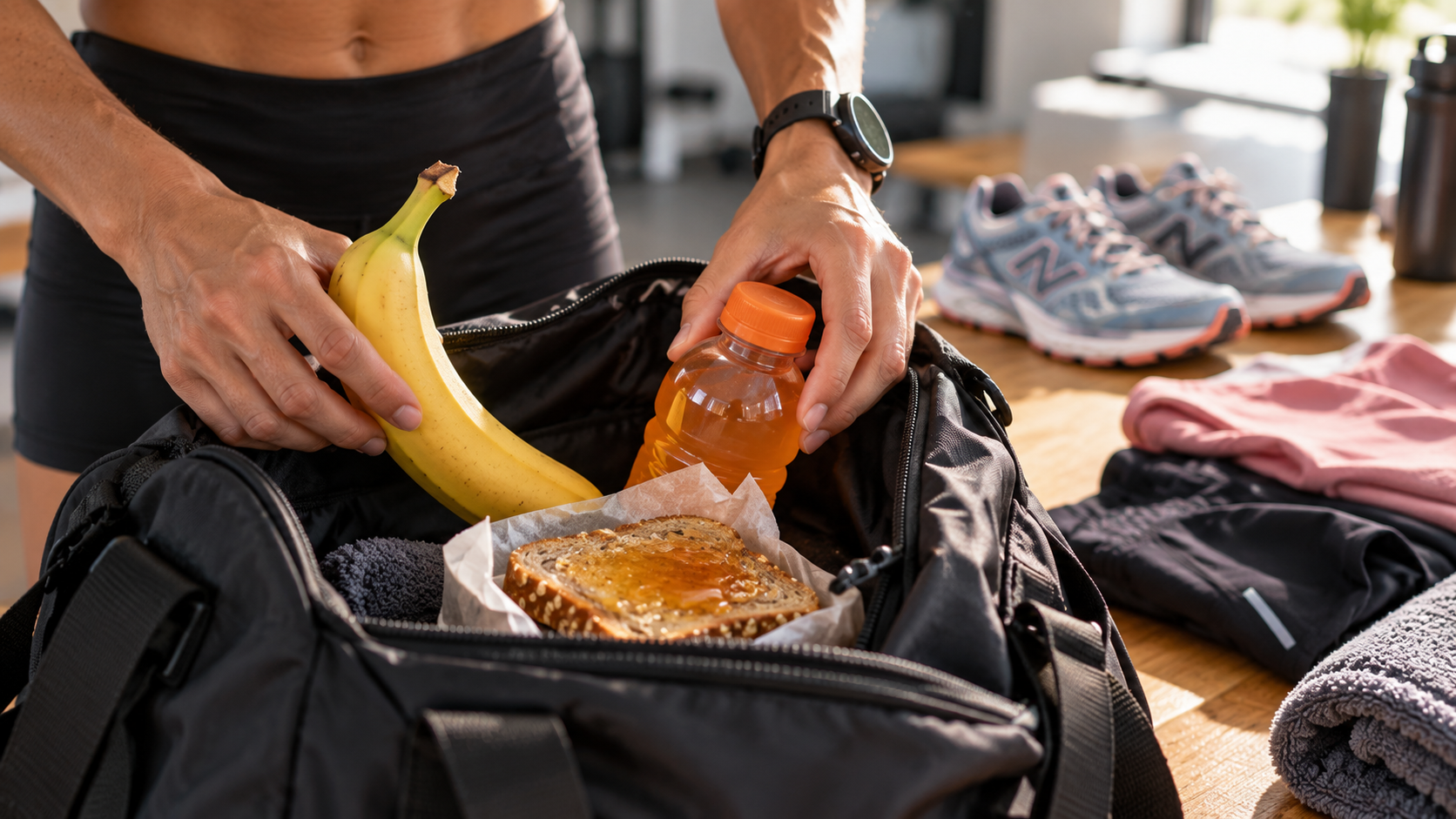
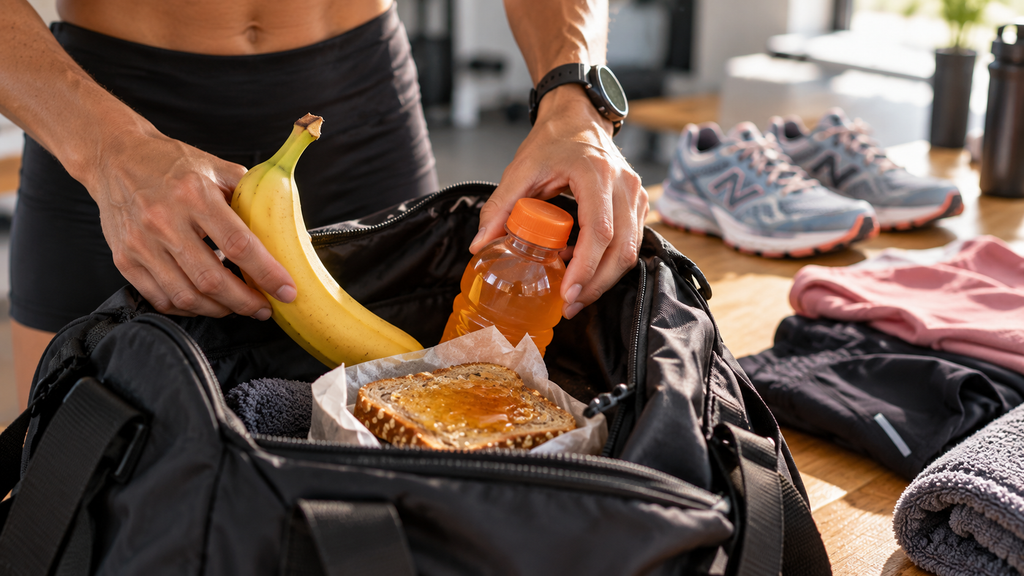
30–60 minutes before training: If you didn’t get a full meal in, a small, fast-digesting carb source works well — a banana, a slice of toast with honey, or a sports drink. Keep fat and fiber low here to avoid GI distress.
Hydration: Aim to start training well-hydrated rather than trying to catch up mid-session. Pale yellow urine is a reasonable, simple gauge.
During Training: Sustaining Output
Not every session needs mid-workout fuel. Use this rough guide:
- Under 60 minutes: Water is usually enough. No food needed unless the session is unusually intense or it’s early in the morning after a long fast.
- 60–90 minutes: Consider small amounts of carbohydrate (15–30g per hour) — a few sports chews, a small gel, or diluted sports drink — especially in hot conditions or high-intensity work.
- Over 90 minutes: Aim for 30–60g of carbohydrate per hour from a mix of sources (glucose and fructose blends absorb better than glucose alone). Pair this with regular fluid and electrolyte intake, particularly sodium, if you’re a heavy sweater or training in heat.
The biggest mistake here isn’t under-fueling — it’s waiting until you already feel depleted to start. By the time you feel it, performance has already slipped. Fuel on a schedule, not on feel.
After Training: Repair and Replenish
The post-training window is where adaptation actually happens — training breaks the body down, and recovery nutrition is what rebuilds it stronger.
Within 30–60 minutes: A combination of carbohydrate (to restock glycogen) and protein (to support muscle repair) in roughly a 3:1 or 4:1 carb-to-protein ratio for most endurance sessions. Chocolate milk, a smoothie with fruit and protein powder, or yogurt with granola all work well.

Within 2 hours: A full meal with quality protein (20–40g), carbohydrate to match training demands, and some fat for satiety and hormone support. Salmon with rice and roasted vegetables, or a burrito bowl with chicken, beans, and rice, are solid options.
Don’t forget fluids and sodium. Rehydrate with roughly 1.25–1.5 liters of fluid for every kilogram of body weight lost during training, and include sodium if the session was long or sweaty.
Sample Fueling Day for a Morning Training Session
Common Fueling Mistakes to Avoid
- Training fasted for long or high-intensity sessions. This can work occasionally for easy aerobic work, but it undermines quality on harder days.
- Waiting to eat until hunger hits post-training. The recovery window is time-sensitive; don’t let appetite suppression from hard exercise talk you out of eating.
- Relying only on protein after training. Carbohydrate is just as critical for glycogen replenishment, especially heading into back-to-back training days.
- Ignoring sodium. Water alone doesn’t replace what’s lost in sweat during long or hot sessions.

The Bottom Line
Fueling before during and after training doesn’t require perfection or complicated tracking — it requires a consistent, simple system: a real meal beforehand, fuel on a schedule during longer efforts, and a deliberate combination of carbs and protein afterward. Get those three windows right most of the time, and your training quality and recovery will follow.