
You’ve built months of fitness, your sessions are finally clicking, and then a sore throat turns into a week on the sofa. Sound familiar? For most athletes, illness costs more training days than injury does. The good news is that immune health for athletes isn’t down to luck. It comes from a handful of habits you control: how you load your training, how much you sleep, how well you fuel, and how you handle the everyday exposures that come with gyms, changing rooms and travel.
This guide explains what actually happens to your immune system when you train hard, why athletes get sick, and the practical steps that keep you healthy through the toughest blocks of the year.
Does hard training really weaken your immune system?
The short answer: regular, moderate exercise makes you more resistant to illness, not less. People who train consistently tend to catch fewer colds than sedentary people.
Things get more complicated at the top end. For decades, researchers described a “J-curve”: risk of upper respiratory infection drops with moderate activity, then climbs again with very heavy or prolonged exertion. Marathon runners, for example, have reported more colds in the week or two after a race.
More recent research has challenged the idea that exercise itself “opens a window” for infection. Many scientists now argue the bigger culprits are the things that travel with hard training and competition: poor sleep, crowded race venues, long-haul travel, under-eating and mental stress. In practice, the lesson is the same either way. Hard training is not the enemy. Hard training without the support around it is.
Why athletes get sick: the six common triggers
- Sudden jumps in training load. A big spike in volume or intensity, rather than high load itself, is one of the most reliable predictors of illness.
- Short or broken sleep. Even a few nights of poor sleep measurably raises your chance of catching a cold.
- Under-fuelling. Training on too little energy, especially too little carbohydrate, increases stress hormones and weakens immune defences.
- Psychological stress. Exams, work deadlines, relationship strain and competition nerves all add to your total stress load.
- Travel and crowds. Planes, buses, hotels and race villages put you close to lots of people and their germs.
- Poor hygiene habits. Shared bottles, unwashed hands and touching your face carry viruses straight in.
Tackle these six and you remove most of the risk.
1. Manage your training load, not just your effort
Your body adapts to stress gradually. Problems start when the jump from one week to the next is bigger than your body can absorb.
- Build progressively. Increase weekly volume in small steps and include an easier week every three to four weeks.
- Don’t stack stressors. Avoid adding a new training block, a hard race and a stressful work week all at once.
- Track simple signals. A resting heart rate that is several beats above normal, poor mood, heavy legs and disturbed sleep are early warning signs. When two or three show up together, back off for a day or two.
- Respect the post-race window. After a key race or heavy block, plan a few easy days. That is when you are tired, depleted and often surrounded by other people.
2. Make sleep a non-negotiable

Sleep is where your immune system does much of its repair and maintenance work. In one well-known study, adults sleeping under six hours a night were about four times more likely to develop a cold after being exposed to the virus than those sleeping more than seven.
For athletes in heavy training, aim for eight to nine hours of time in bed.
- Keep a consistent bedtime and wake time, even at weekends.
- Keep your bedroom cool, dark and quiet.
- Avoid caffeine in the eight hours or so before bed.
- Add a 20–30 minute nap on heavy training days if night-time sleep falls short.
- After evening sessions, give yourself a wind-down routine rather than going straight from training to screens.
For a deeper dive, see our post on sleep as a performance enhancer.
Quality Sleep: Making Any Hotel Room Competition-Ready
3. Fuel enough to support training and immunity
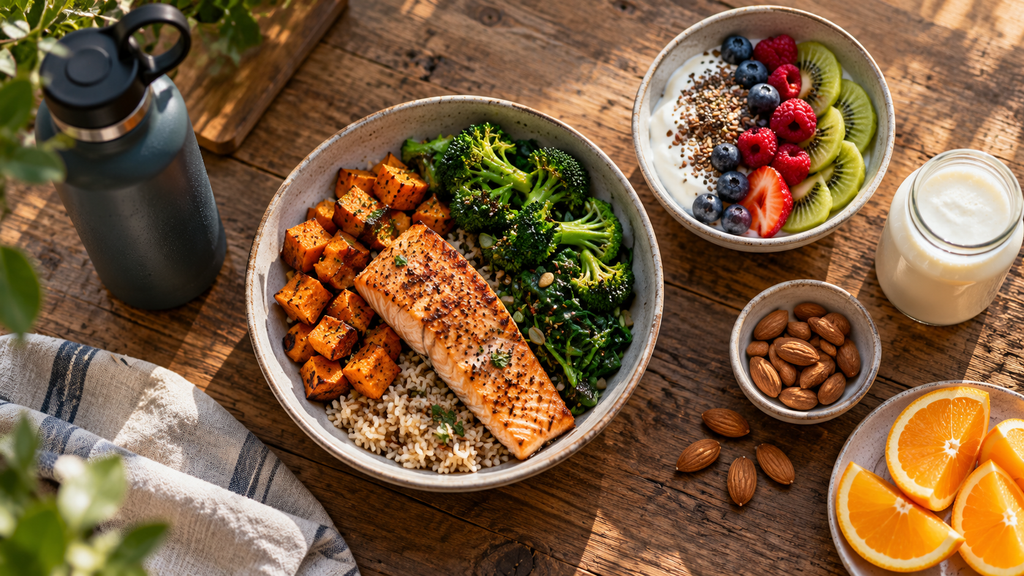
Your immune cells need energy and nutrients just like your muscles do. Chronic under-eating, sometimes called low energy availability, is strongly linked to more frequent illness in athletes.
- Eat enough overall. If your weight is drifting down without trying, or you feel constantly flat, you are probably under-fuelling.
- Use carbohydrate around hard sessions. Taking carbs during long or intense sessions helps limit the rise in stress hormones that can dampen immune function. A sports drink or gel on rides and runs over 90 minutes is a simple win.
- Spread protein through the day. Aim for a good protein source at each meal, such as eggs, Greek yoghurt, fish, chicken, beans or tofu.
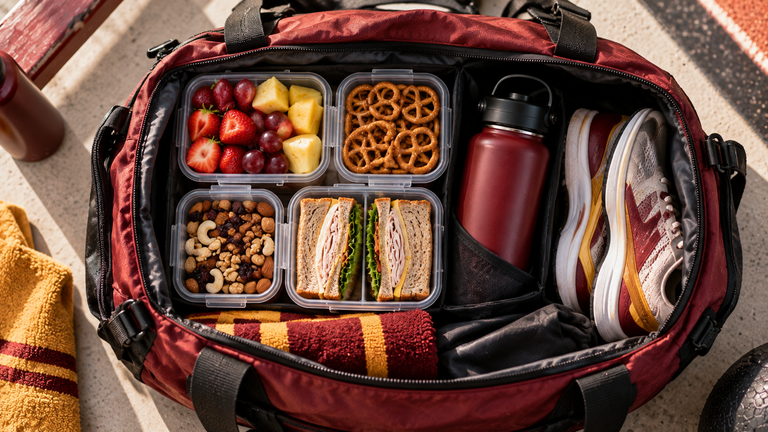
- Eat the rainbow. Fruit and vegetables supply vitamin C, polyphenols and fibre that support immune and gut health. Aim for a wide variety of colours each day.
- Feed your gut. Fermented foods like kefir, live yoghurt and sauerkraut, plus plenty of fibre, support the gut bacteria that help regulate immunity.
- Stay hydrated. Saliva contains antibodies that form a first line of defence, and dehydration reduces saliva flow.
New to athlete nutrition? Start with Athlete Nutrition 101.
4. Supplements: what has evidence and what doesn’t
No supplement can make up for poor sleep or under-eating. A few, though, have reasonable evidence for athletes.
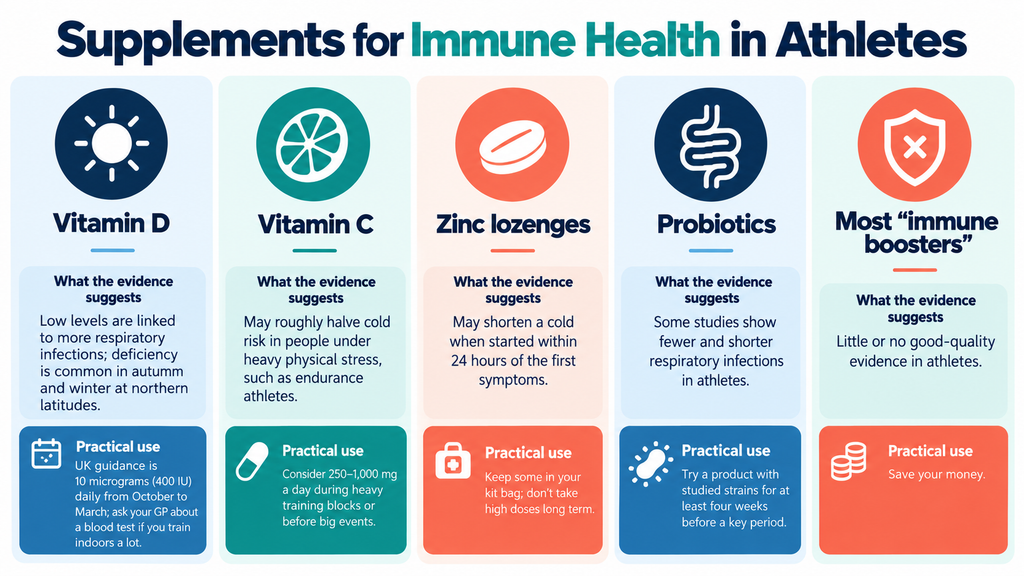
If you compete under anti-doping rules, choose batch-tested products (for example, those carrying the Informed Sport mark). Read more in our guide to supplements worth your money.
Supplements: What’s Worth Your Money and What Isn’t
5. Reduce your exposure to germs
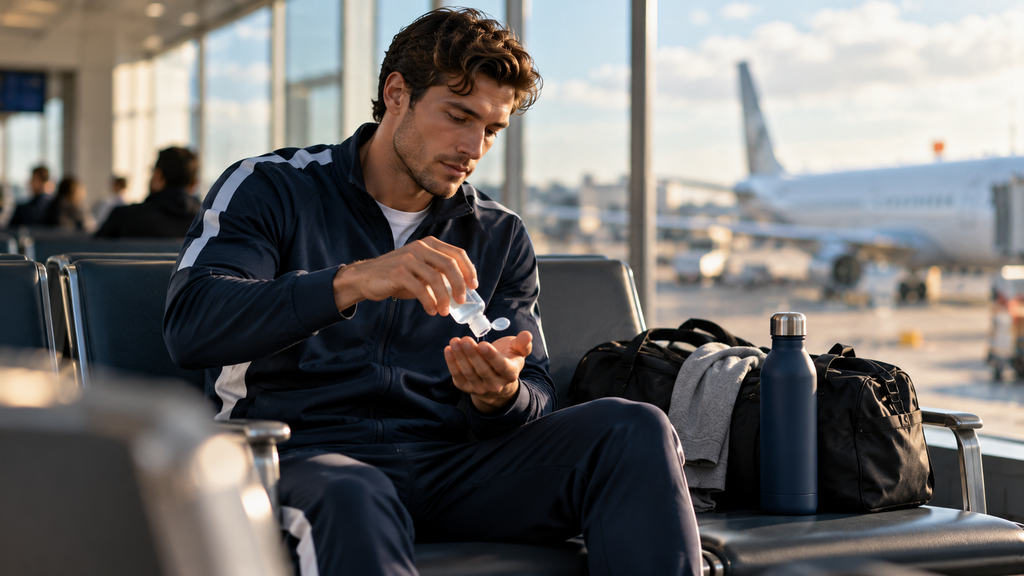
Most colds reach you through your hands, your mouth and the air around you. A few simple habits make a real difference, especially in busy periods.
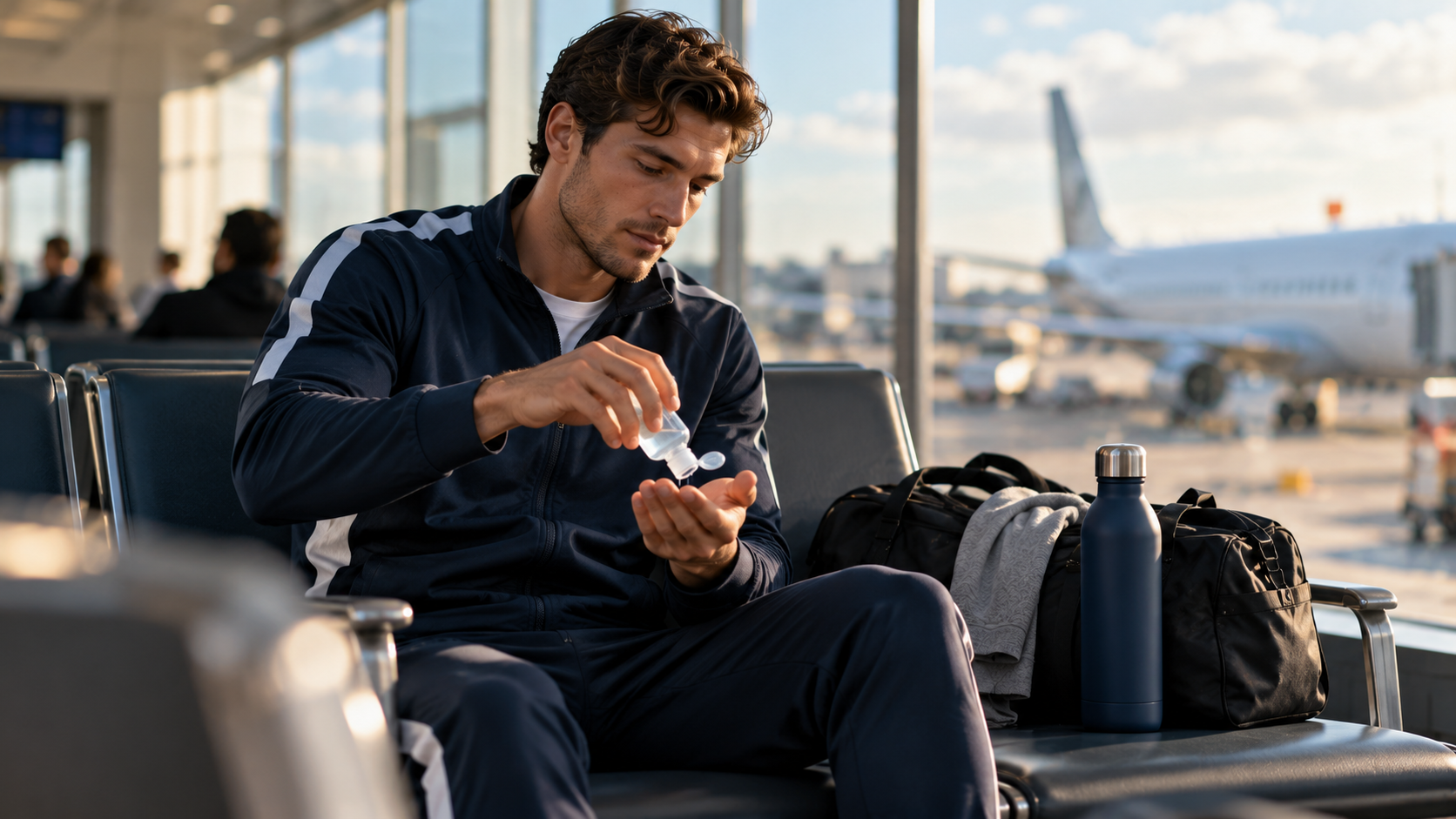
- Wash your hands with soap and water before eating and after using shared equipment. Carry hand sanitiser in your kit bag.
- Never share water bottles, towels or cutlery, even with teammates.
- Avoid touching your eyes, nose and mouth, particularly at the gym.
- Keep your distance from people who are coughing or sneezing, and avoid crowds in the days before a key event.
- Travel smart. Wipe down tray tables, keep your hands clean on public transport, and consider a mask on busy flights before important competitions.
- Wear flip-flops in shared showers and changing rooms to avoid skin infections.
Travelling over the holidays? See maintaining fitness while travelling.
6. Manage stress outside training
Your body doesn’t separate training stress from life stress. A tough week at work or university adds to the total load in the same way extra intervals do.
- When life stress is high, reduce training intensity rather than pushing through.
- Build in short daily recovery practices: a walk, breathing exercises or ten minutes of quiet time.
- Stay connected with friends, family and teammates. Social support buffers stress.
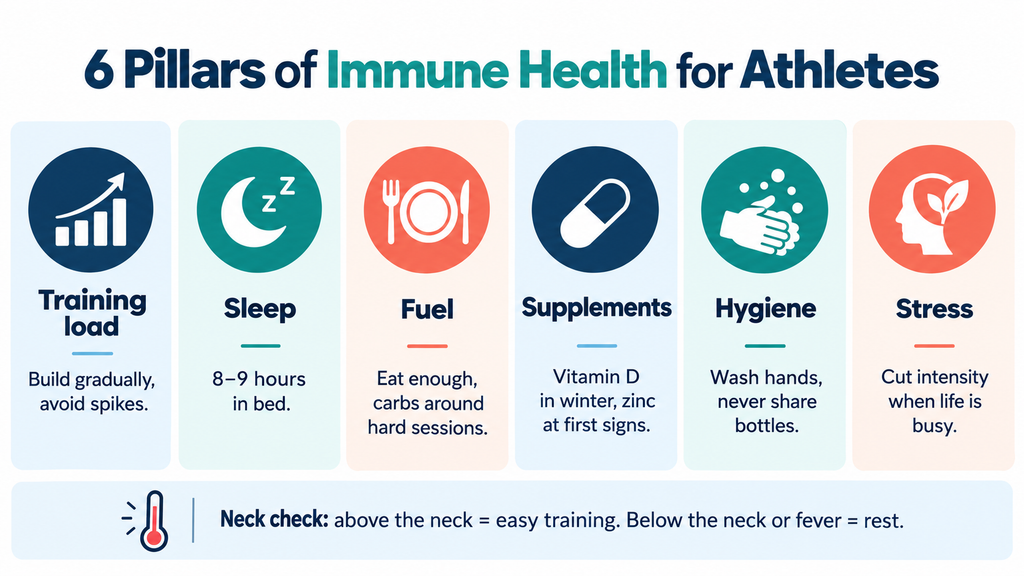
Should you train when you’re sick? Use the “neck check”
Even with good habits, you will occasionally catch something. The “neck check” is a simple rule of thumb many sports doctors use.
- Symptoms above the neck only (runny nose, mild sore throat, sneezing): light, easy training is usually fine. Shorten the session, keep the intensity low and stop if you feel worse.
- Symptoms below the neck (fever, chest congestion, body aches, upset stomach, swollen glands): rest completely.
- Never train with a fever. Exercising with a fever or viral illness can, in rare cases, lead to inflammation of the heart muscle.
When you return, ease back in over a few days. A good guide is one easy day for every day you were ill before any hard sessions. If symptoms last more than a week or keep coming back, see your GP.
Frequently asked questions
How often do athletes get sick? Most healthy adults catch two to three colds a year. Athletes in very heavy training, or around major competitions, can be at higher risk, particularly when sleep and fuelling slip.
Can overtraining cause illness? Yes. Frequent, lingering infections are one of the classic signs of overreaching and overtraining. If you keep getting ill, look at your total training and life stress before anything else.
Does vitamin D help athletes’ immune systems? Correcting low vitamin D levels appears to reduce the risk of respiratory infections. Taking extra when your levels are already healthy is unlikely to add further benefit.
What’s the best way to boost immune health for athletes before a big race? In the final two weeks: protect your sleep, avoid sudden training changes, eat enough carbohydrate, reduce your exposure to crowds and sick people, and keep your hands clean.
The bottom line
Good immune health for athletes comes from the basics done consistently: smart training progression, eight to nine hours of sleep, enough fuel, a few evidence-backed supplements, good hygiene and managed stress. Get those right and you can train hard all winter and arrive at the start line healthy.
This article is for general information and isn’t a substitute for medical advice. If you’re unwell or unsure, speak to your GP or a sports medicine professional.