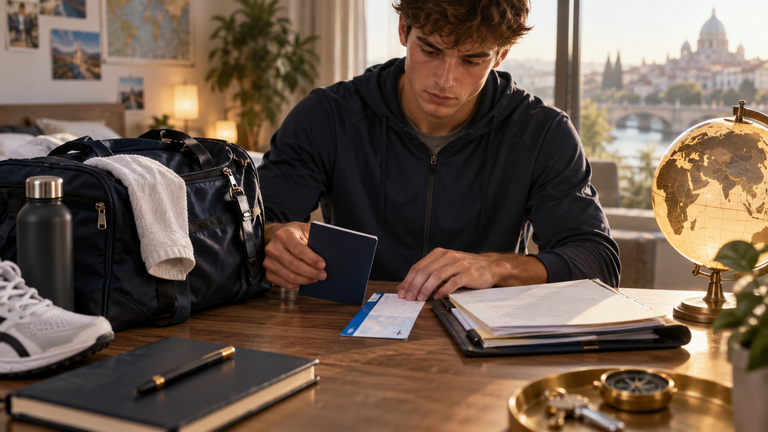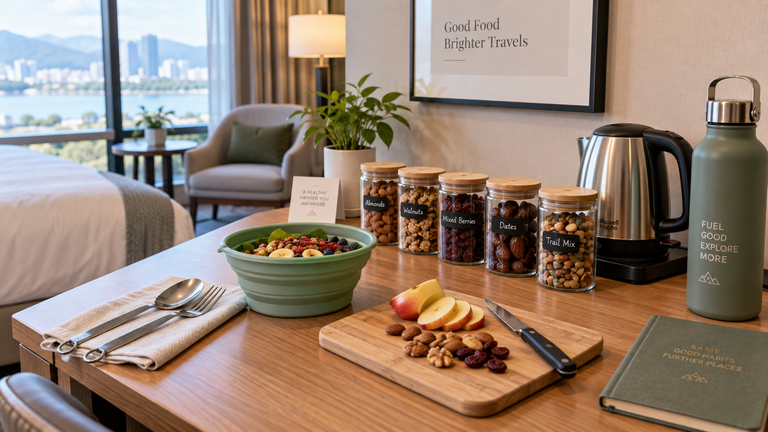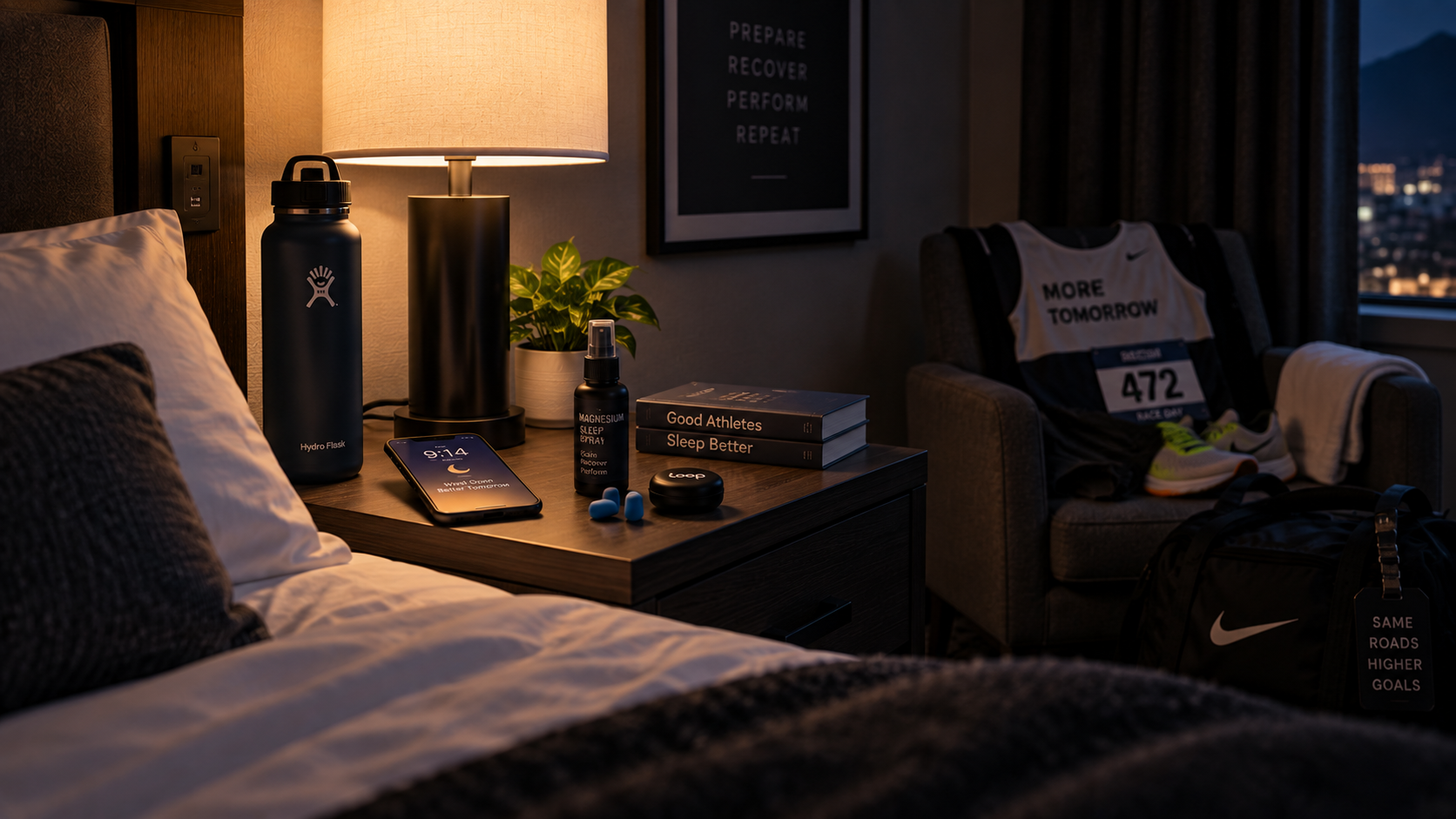
For athletes, quality sleep is as crucial as training and nutrition. Yet competitive events often require staying in hotel rooms, which can present unique challenges to maintaining optimal sleep habits. This guide will help you transform any hotel room into a sleep sanctuary that supports peak athletic performance.
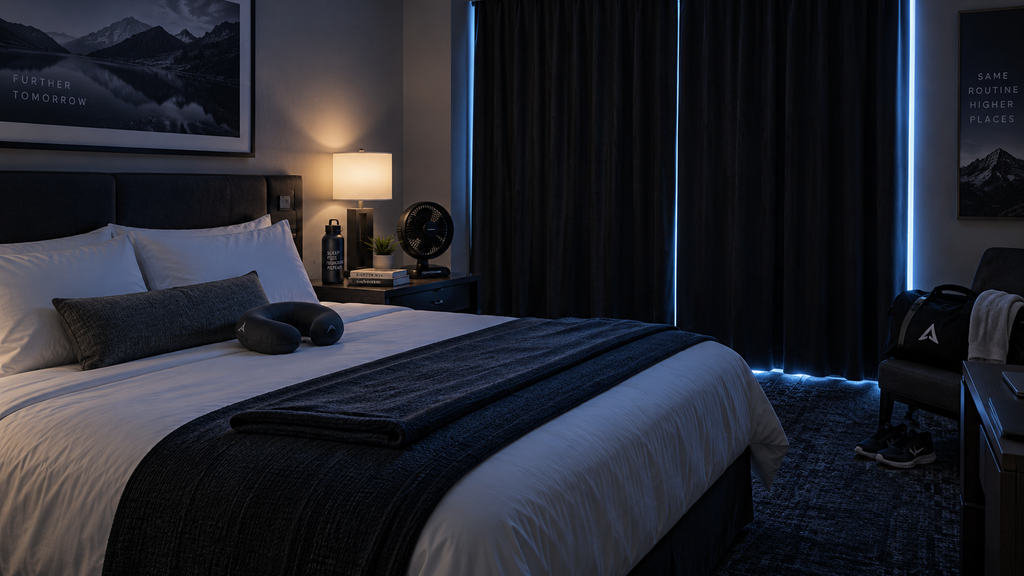
The First 15 Minutes: Immediate Actions
The moment you check in, take these steps to begin optimizing your room:
- Temperature Control
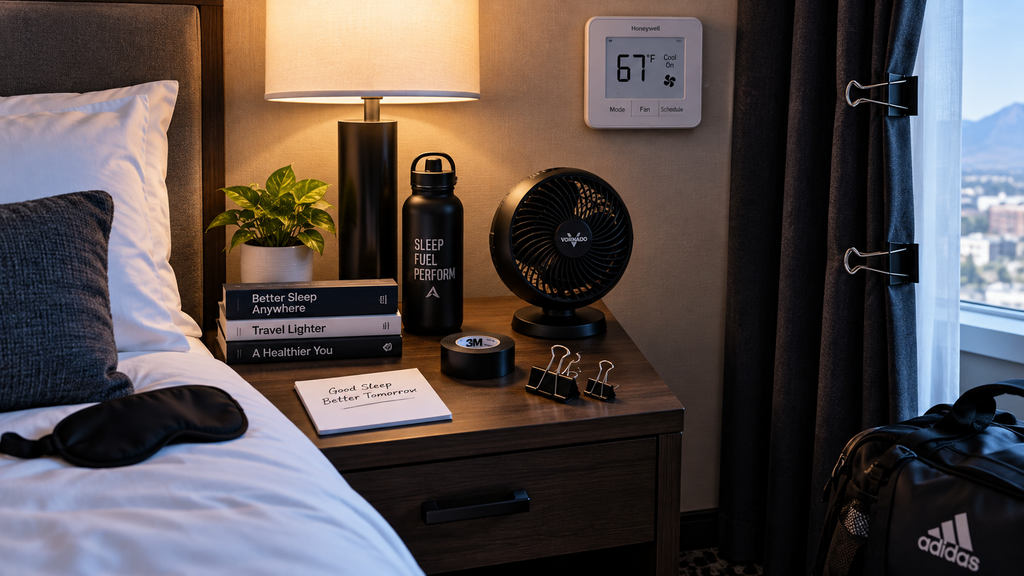
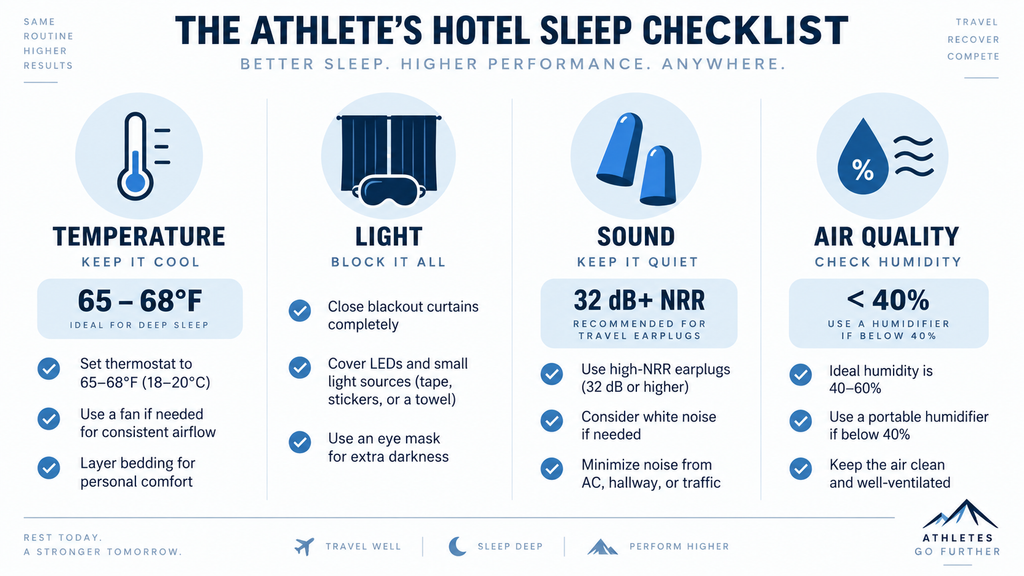
Request a room between floors 4-8 when booking – these floors typically maintain the most consistent temperatures. Immediately adjust the thermostat to 65-68°F (18-20°C), the ideal sleep temperature range for most athletes. If possible, bring a small portable fan to create white noise and maintain airflow. - Light Management
Unpack your portable blackout curtain hooks (such as bulldog clips) and clip them across any gaps in the hotel curtains. Place black electrical tape over any blinking electronics. Consider taping the peephole if it lets in hallway light. - Sound Assessment
Run the bathroom fan and AC unit to evaluate their sound levels. If they’re too loud or irregular, download a white noise app as backup. Alert the front desk to any concerning external noise sources.
Creating Your Sleep Environment
Light Control
Professional athletes know that even minimal light exposure can disrupt sleep quality. Beyond basic curtain management:
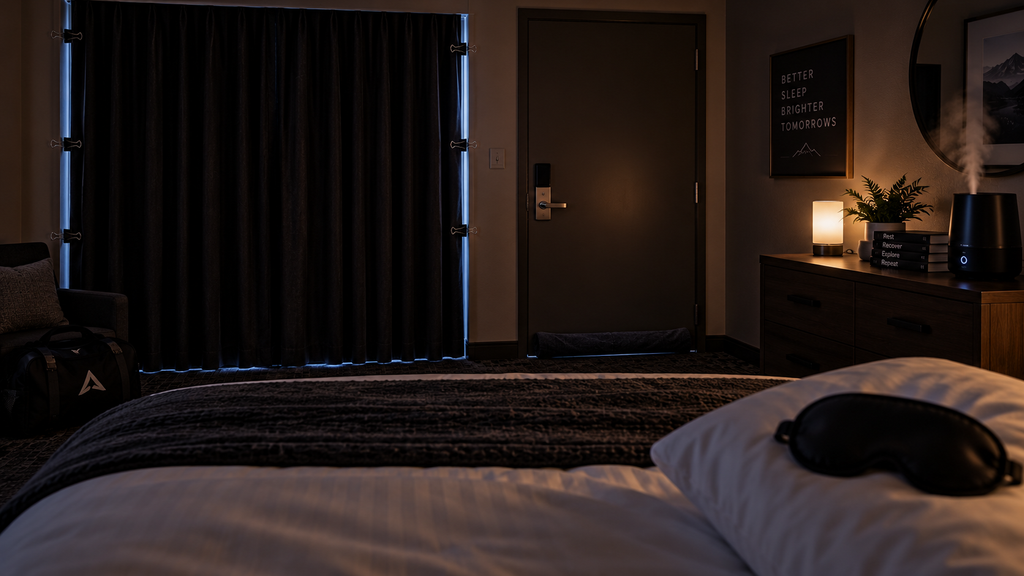
- Cover the door frame with a dark towel to block hallway light
- Face all clock displays away from the bed
- Bring a sleep mask rated at 99% light blocking as backup
Temperature Optimization
Your body temperature needs to drop for optimal sleep:
- Pack a lightweight blanket that you use at home
- Consider bringing your own pillowcase – hotel pillowcases often trap heat
- Place your portable fan to create a cooling cross-breeze
- Keep spare socks nearby – cold feet can disrupt sleep
Air Quality
Hotel air can be surprisingly dry and stale:
- Travel with a portable humidifier for rooms below 40% humidity
- Place a damp towel over the heating/cooling unit if needed
- Consider bringing green tea bags – they can act as natural air fresheners
- Keep the bathroom door closed to minimize humidity variation
Pre-Sleep Ritual Adaptation
Maintain your home sleep ritual as closely as possible:
Timing
- Adjust your schedule to the competition time zone several days before travel
- Keep your bedtime consistent, even if it means declining team dinners
- Start your wind-down routine 90 minutes before intended sleep time
Environment
- Set up your portable blue light filters on any devices
- Arrange your competition gear so morning preparation is minimal
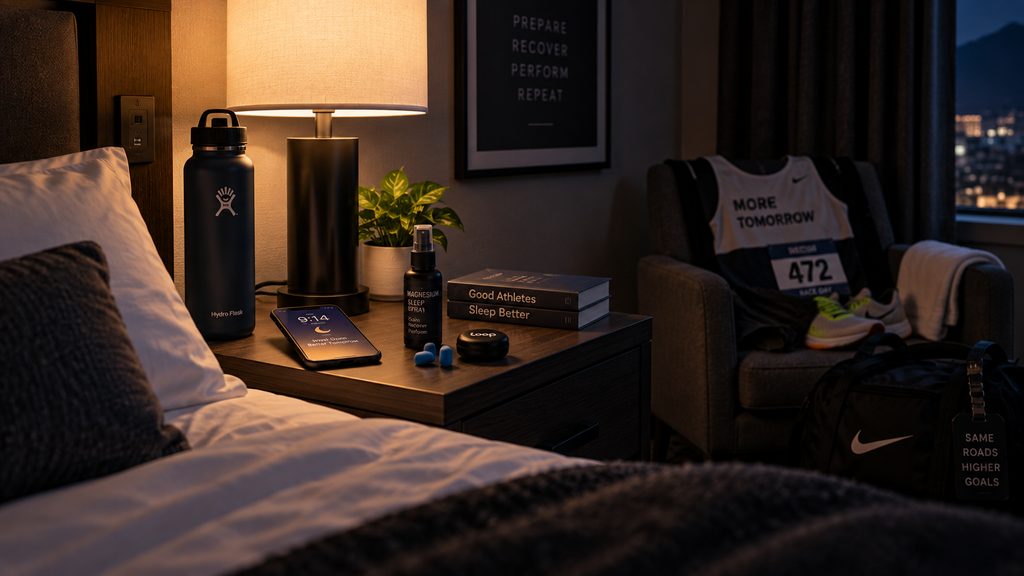
- Place a full water bottle within reach of the bed
- Keep your room key and phone in the same spot every night
Emergency Protocols
Even with perfect preparation, sleep disruptions can occur. Have these backup plans ready:
Noise Disruptions
- Keep high-quality earplugs rated at least 32dB NRR
- Download both white noise and nature sound apps
- Know your rights regarding quiet hours and don’t hesitate to contact management
Temperature Issues
- Pack a lightweight emergency blanket for overly cold rooms
- Bring a spray bottle for cooling mist or a small travel size fan if the room runs hot
- Know how to shut off automated heating/cooling systems
Sleep Quality Can Make A Difference
Sleep quality can make the difference between standing on the podium and watching from the sidelines. By treating your hotel room setup with the same attention to detail as your training routine, you create an environment conducive to the deep, restorative sleep that athletic excellence demands.
Remember, these aren’t just good practices – they’re competitive advantages. In high-level competition, where margins of victory are often razor-thin, optimizing your sleep environment could be the edge that sets you apart from your competitors.
More tips for athletes: