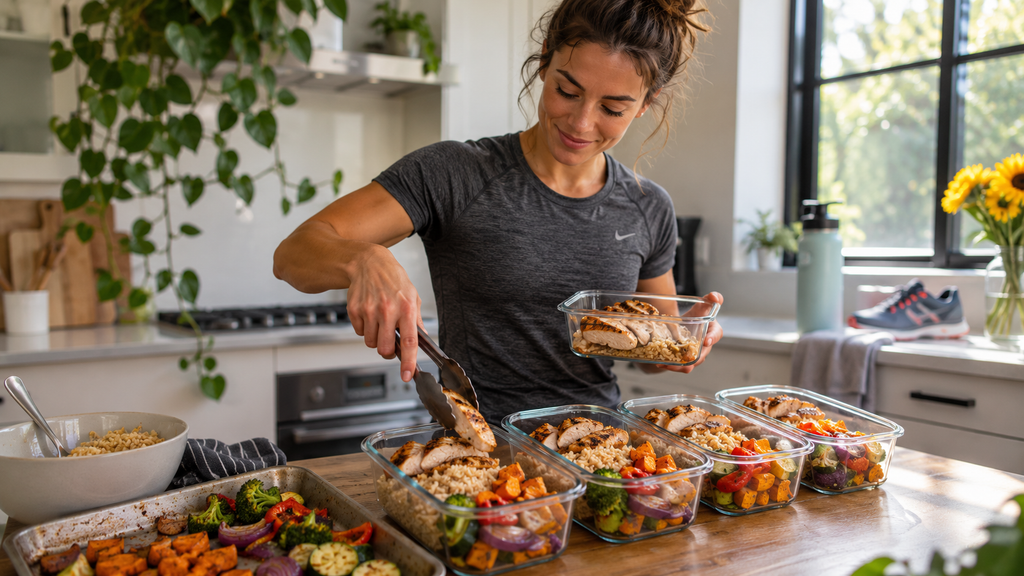
You can plan the perfect training block, but if Tuesday night ends with a petrol-station sandwich after a late session, your nutrition plan has already failed. For most athletes, the problem isn’t knowing what to eat. It’s having good food ready when you’re tired, hungry and short on time.
That’s where meal prep for athletes earns its place. One focused 90-minute session on a Sunday can set you up with protein, carbohydrates, vegetables and snacks for most of the training week. No elaborate recipes, no hours in the kitchen, and no eating the same bland chicken and rice seven days in a row.
This guide walks you through a simple, repeatable Sunday system: what to buy, what to cook, the exact order to do it in, and how to store it safely so it still tastes good on Thursday.
Why meal prep matters more for athletes
Everyone benefits from planning meals, but athletes have three extra reasons to take it seriously.
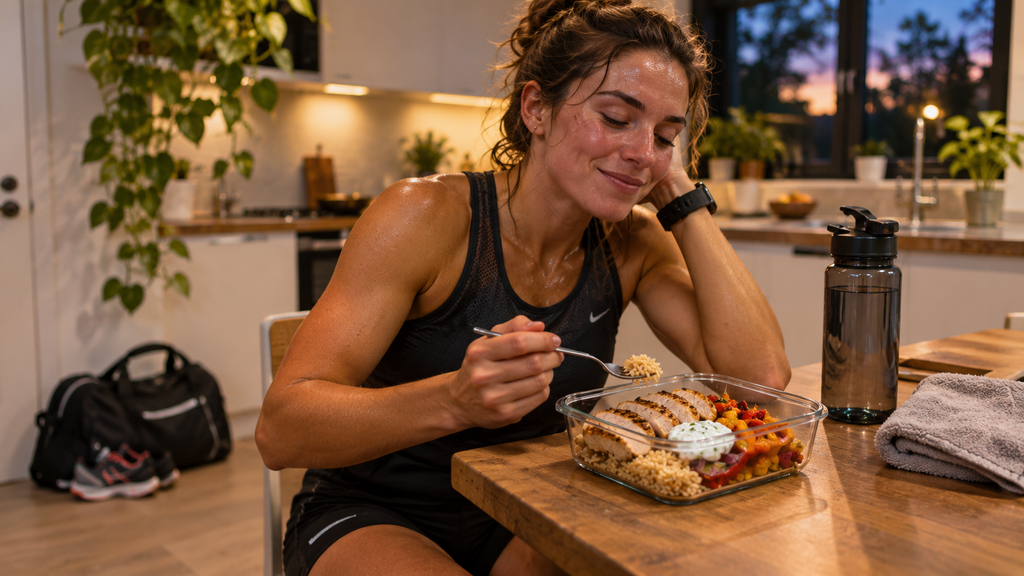
Your recovery window doesn’t wait. After a hard session, getting protein and carbohydrate in within a couple of hours helps you repair muscle and refill glycogen stores. When a balanced meal is already in the fridge, you eat it. When it isn’t, you graze on whatever is nearest.
Your needs are higher and less predictable. Sports nutrition guidelines commonly suggest around 1.2–2.0 g of protein per kg of body weight per day for athletes, with carbohydrate needs rising sharply on heavy training days. Hitting those numbers by accident is unlikely. Hitting them with a prepped fridge is easy.
Decision fatigue is real. Training, work, study and family already demand plenty of willpower. Deciding what to cook at 8pm after intervals is one decision too many. Meal prep moves that decision to Sunday, when you’re rested and thinking clearly.
The building-block approach (not fixed meals)
The biggest mistake people make with athlete meal prep is cooking five identical boxed meals. By Wednesday you’re bored, and by Thursday you’re ordering a takeaway.
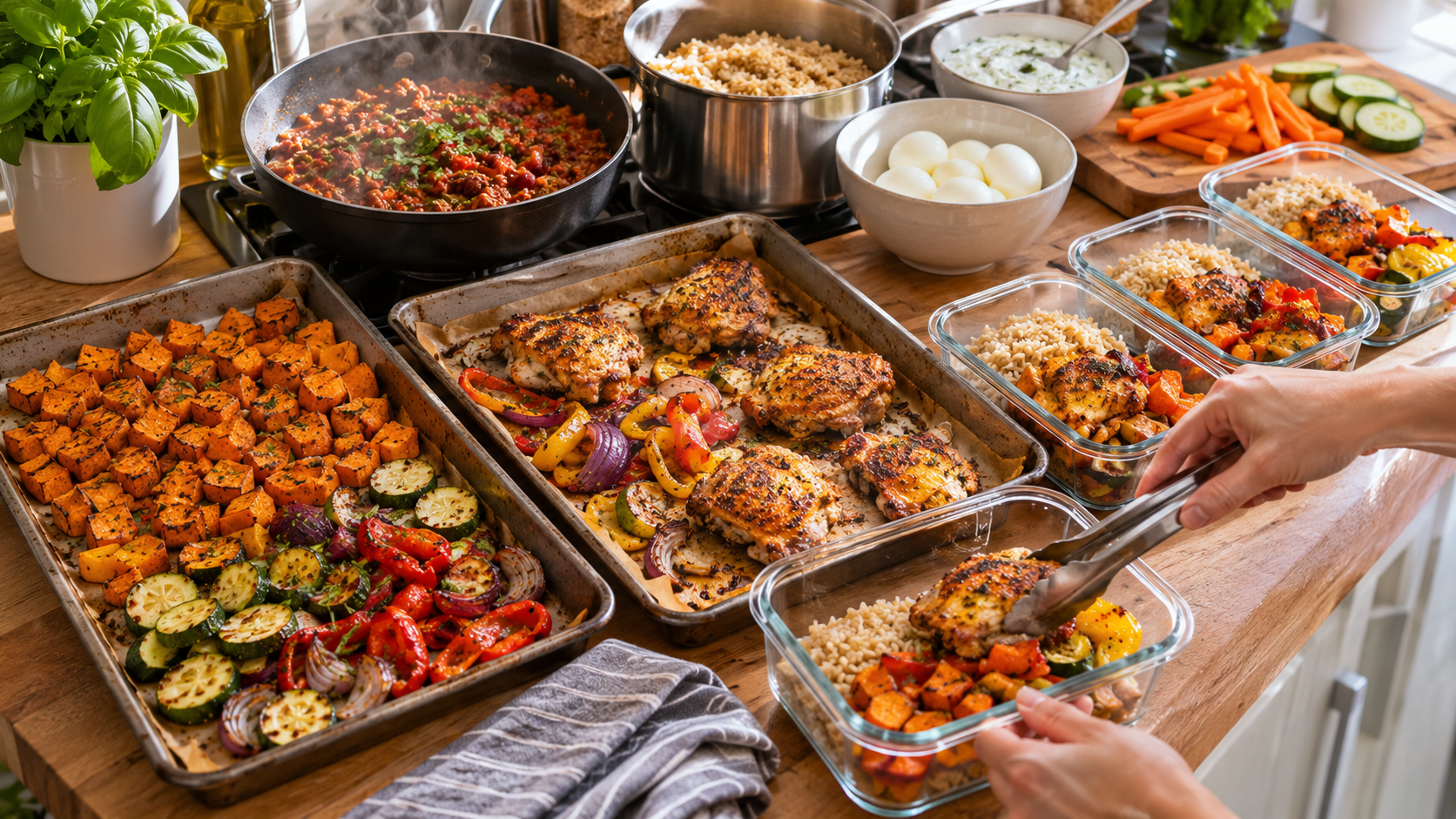
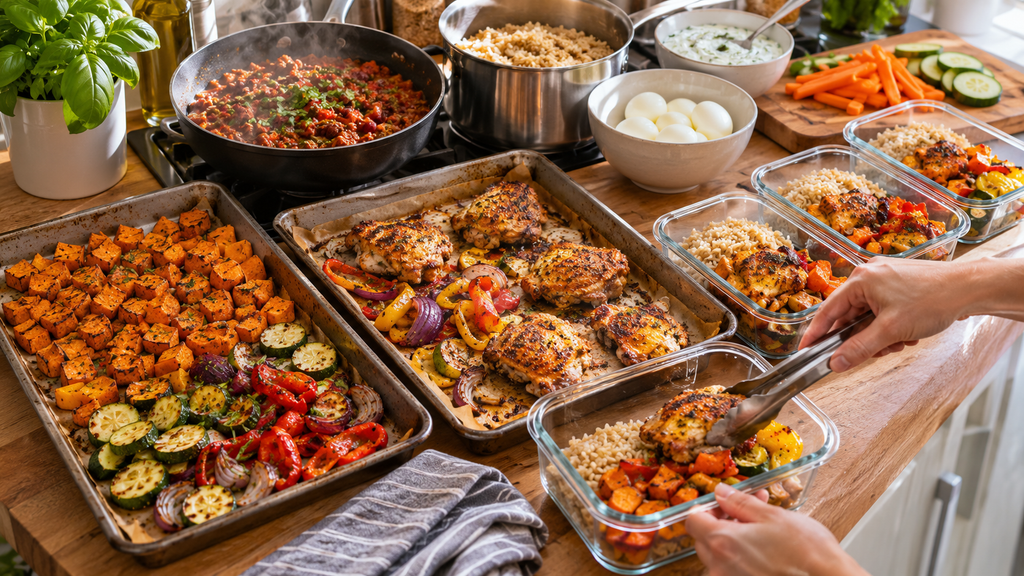
Instead, prep components: two proteins, two carbohydrates, a big tray of vegetables, one sauce and some grab-and-go snacks. Each day you combine them differently. Chicken, rice and roasted peppers with yoghurt sauce on Monday becomes a turkey-mince sweet-potato bowl with pesto on Tuesday. Same Sunday effort, far more variety.
The 90-minute Sunday meal prep system, step by step
The secret to fast batch cooking for athletes is sequencing: start the slowest jobs first so the oven, hob and rice pan are all working while your hands do something else.
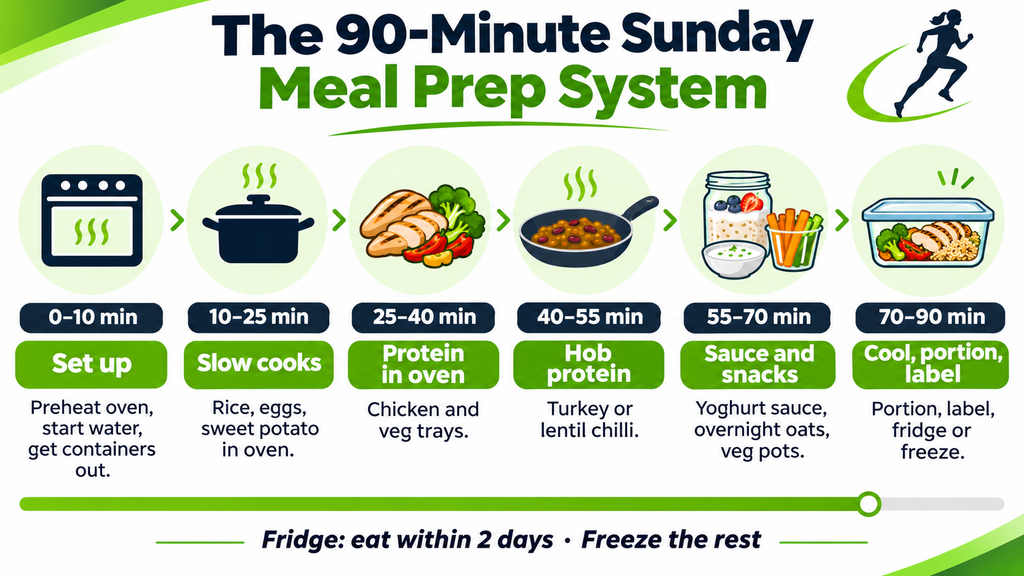
Minutes 0–10: Set up
- Preheat the oven to 200°C (180°C fan) and line two large baking trays.
- Put a pan of water on for grains and a small pan on for eggs.
- Clear the worktop, get containers out and put the bin bag within reach.
Minutes 10–25: Start the slow cooks
- Rinse and cook rice or quinoa (roughly 500 g dry makes about 8–10 portions).
- Boil 8–10 eggs for 9 minutes, then move them to cold water.
- Cube 1 kg of sweet potatoes, toss with oil and salt, and get tray one into the oven.
Minutes 25–40: Protein in the oven
- Season 1 kg of chicken thighs (or tofu) with paprika, garlic, salt and pepper. Tray two goes in for 25–30 minutes, until the juices run clear.
- Chop peppers, courgettes and red onions and add them to the edges of either tray.
Minutes 40–55: Second protein on the hob
- Brown 500 g of lean turkey or beef mince with onions, add a tin of chopped tomatoes, a tin of kidney beans and chilli spice, then simmer. Swap in red lentils for a plant-based version.
Minutes 55–70: Sauce, snacks and breakfasts
- Stir together a sauce: Greek yoghurt, lemon, garlic and herbs, or a quick pesto.
- Make three jars of overnight oats with oats, milk, yoghurt and berries.
- Wash and chop carrots, cucumber and grapes into snack pots.
Minutes 70–90: Cool, portion, label, clean
- Spread rice thinly on a tray so it cools fast, then portion it.
- Peel the eggs, slice the chicken and divide everything into containers.
- Label each box with the contents and the date, refrigerate or freeze, and wash up while things cool.
Your athlete meal prep shopping list
This list feeds one athlete for about five days of lunches and dinners, plus three breakfasts and daily snacks. Scale up for bigger training loads or a household.
| Category | What to buy |
|---|---|
| Proteins | 1 kg chicken thighs (or firm tofu), 500 g lean turkey or beef mince (or red lentils), 10 eggs, 1 kg Greek yoghurt |
| Carbohydrates | 500 g rice or quinoa, 1 kg sweet potatoes, 300 g rolled oats, wholemeal wraps |
| Vegetables and fruit | 3 peppers, 2 courgettes, 2 red onions, bagged spinach, carrots, cucumber, frozen berries, bananas, grapes |
| Store cupboard | Chopped tomatoes, kidney beans, olive oil, paprika, chilli powder, garlic, lemons, fresh herbs, pesto |
| Kit | 10–12 lidded containers (glass or BPA-free), 3 jars, freezer bags, masking tape and a marker |
A sample week from one Sunday session
Because you’re mixing components rather than repeating one meal, each day feels different.
| Day | Lunch | Dinner |
|---|---|---|
| Monday | Chicken, rice, roast veg, yoghurt sauce | Turkey chilli with sweet potato |
| Tuesday | Egg and spinach wrap with chilli leftovers | Chicken and sweet potato bowl with pesto |
| Wednesday | Chilli rice bowl (from freezer) | Chicken, quinoa and roast veg (from freezer) |
| Thursday | Chicken wrap with veg and yoghurt sauce (from freezer) | Chilli-stuffed sweet potato (from freezer) |
| Friday | Leftovers mix-and-match | Flexible night: cook fresh or eat out |
Breakfasts are the overnight oats Monday to Wednesday; snacks are boiled eggs, yoghurt, fruit and veg pots. On heavier training days, add an extra carbohydrate portion to lunch or dinner.
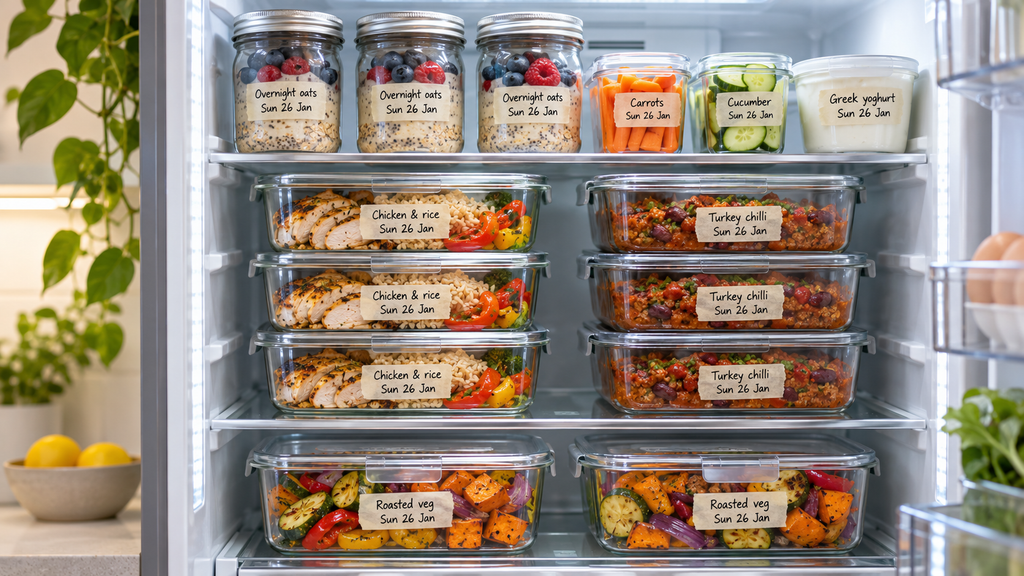
Storing your meal prep safely
Food safety matters even more when getting ill means missing training. Follow these simple rules:
- Cool fast. Get cooked food into the fridge within about an hour, and spread rice and mince out on trays so they cool quickly.
- Fridge for the first two days, freezer for the rest. The UK Food Standards Agency advises eating leftovers within two days. Freeze Wednesday-to-Friday portions straight away and move each to the fridge the night before.
- Treat rice carefully. Eat refrigerated rice within 24 hours, or freeze it in portions. Only reheat it once.
- Reheat until steaming hot all the way through, and never reheat anything more than once.
- Label everything with the contents and the date it was cooked.
Five tips to make your Sunday session stick
- Book it like a training session. Put it in your calendar at the same time every week.
- Shop on Saturday. Your 90 minutes should be cooking time, not supermarket time.
- Rotate one ingredient per week. Swap chicken for salmon, or rice for pasta, to keep things fresh without relearning the system.
- Make sauces do the heavy lifting. A good sauce turns the same base into a new meal.
- Start small if you need to. Even prepping just lunches saves five decisions a week.
Meal prep for athletes: frequently asked questions
How long does meal prep last in the fridge? For safety, plan to eat refrigerated cooked meals within two days, and rice within 24 hours. Freeze everything you won’t eat by then.
How much protein should athletes meal prep each day? Most athletes do well spreading 20–40 g of protein across each meal and snack. Your total depends on body weight, sport and training load, so a sports dietitian can give you a personal target.
Can I meal prep on a plant-based diet? Yes. Swap chicken for tofu or tempeh, mince for red lentils, and add chickpeas or edamame for extra protein. The 90-minute order stays the same.
Is meal prep worth it if I only train a few times a week? Absolutely. The time you save and the takeaways you avoid add up whether you train three times a week or ten.
Your 90 minutes starts this Sunday
Consistent training is built on consistent fuelling, and consistent fuelling is built on preparation. This Sunday system gives you a fridge full of balanced, athlete-friendly food for the price of one long film. Try it for three weeks, tweak the ingredients to your sport and your tastes, and you’ll wonder how you ever trained without it.
Want to go deeper? Read Athlete Nutrition 101: Macronutrients, Timing, and Portion Basics and Fuelling Before, During, and After Training next.
This article is general information, not personalised nutrition advice. For specific needs, speak to a registered dietitian or sports nutritionist.