
Overtraining develops when the body is repeatedly asked to perform without enough time or resources to recover. It doesn’t require extreme programs or professional-level workloads. Consistent training, combined with poor recovery habits, can slowly push the body past its ability to adapt. Understanding overtraining helps protect both performance and overall health.

What Overtraining Really Means
Training works by applying stress, then allowing the body to recover and rebuild stronger. Normal training fatigue fades with rest, sleep, and food. Overtraining appears when that recovery window never fully closes.
Short-term overreaching is often planned. Athletes may train hard for a block, feel temporarily run down, then bounce back stronger after rest. Overtraining is different. Fatigue lingers, progress reverses, and the body stays stuck in a stressed state. Because it develops gradually, many people don’t realise what’s happening until symptoms are well established.
Common Warning Signs to Watch For

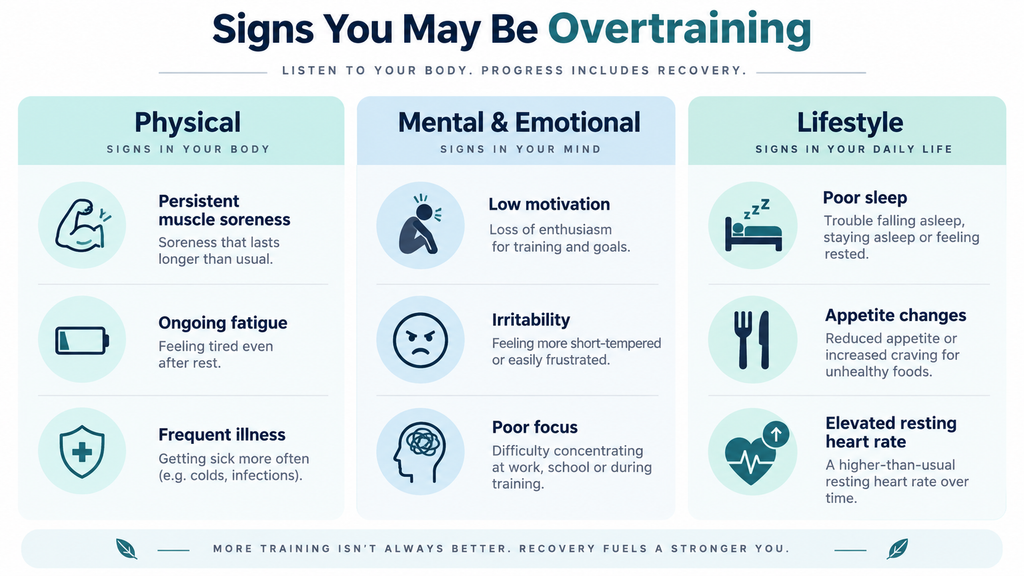
Physical signs
Ongoing muscle soreness, joint stiffness, or a heavy feeling in the limbs can linger for days or weeks. Sessions that once felt manageable may suddenly feel exhausting, even at lower intensities. Performance drops, whether that’s slower times, reduced strength, or difficulty completing usual training volumes. Illnesses may become more frequent, and minor aches can turn into stubborn injuries.
Mental and emotional signs
Overtraining often affects mood before it affects performance. Motivation fades, and enthusiasm for training declines. Irritability, anxiety, or feeling emotionally flat can appear without an obvious cause. Some people notice a reduced ability to concentrate, making both training sessions and everyday tasks feel harder than normal.
Lifestyle red flags
Sleep quality often changes, with lighter sleep, frequent waking, or feeling unrefreshed in the morning. Appetite can drop due to fatigue or rise as the body tries to compensate for stress. Resting heart rate may trend upward, and recovery between sessions may take noticeably longer than usual.
Why Overtraining Happens

Overtraining is rarely the result of one poor decision. It usually builds from repeated small mismatches between training stress and recovery. Sudden jumps in volume, intensity, or frequency can overwhelm the body, especially when layered on top of an already full schedule.
Skipping rest days or treating recovery as optional accelerates fatigue. Inadequate fueling adds another layer of strain, as the body lacks the energy needed for repair. Stress outside of training plays a major role too. Work pressure, emotional stress, disrupted sleep, or frequent travel all tax the same systems responsible for recovery.
How Overtraining Affects Progress
When recovery falls behind, performance gains stall. Strength may decrease, endurance fades, and coordination can suffer. Reaction times slow, and workouts feel harder despite unchanged effort.
Injury risk rises as muscles, tendons, and joints fail to repair properly. Hormonal disruption and immune suppression can follow, leading to longer illnesses and extended downtime. Ignoring early signs often turns short-term fatigue into a much longer recovery process.
Prevention Strategies That Actually Work

Effective training plans include recovery as a core component. Scheduled rest days and lighter weeks allow the body to absorb training stress rather than accumulate it. Deload weeks help reset fatigue and often restore motivation.
Fueling should support training demands. Consistent meals, sufficient carbohydrates, and adequate protein intake support muscle repair and energy availability. Sleep deserves equal attention. Regular sleep routines and sufficient time in bed have a direct effect on recovery capacity.
Tracking simple indicators helps catch issues early. Noticing patterns in mood, sleep quality, resting heart rate, or perceived effort can highlight when training needs adjustment.
What to Do If You Think You’re Overtrained
Backing off is usually the fastest path forward. Reducing volume, intensity, or both gives the body space to recover. Complete rest may be helpful in some cases, while others benefit from low-stress movement like walking, swimming, or gentle mobility work.
Recovery timelines vary. Mild overtraining can resolve within days or weeks, while more severe cases take longer. If symptoms don’t improve with reduced training, professional input can help identify contributing factors and guide recovery.
Practical Takeaways
Overtraining often announces itself quietly. Small shifts in energy, mood, or performance matter. Paying attention to these signs protects long-term progress. Sustainable training favours steady effort, planned recovery, and flexibility rather than constant intensity.
Progress relies on the balance between stress and recovery. Training harder without recovering better rarely leads to lasting improvement. Respecting recovery keeps training productive and supports long-term performance.
More information for athletes: